“MY HEART WILL ALWAYS BE BROKEN... AND ONE
DAY, A TRANSPLANT MIGHT BE MY ONLY OPTION.”
- ELLE PENDRICK, FIVE-TIME OPEN-HEART SURGERY SURVIVOR
Numb. Shell-shocked. Terrified.
Elle will never forget the moment she opened an email from her doctor, telling her that she
needed her fifth open heart surgery.
She was 33 years old.
“I dropped my phone while staring at my inbox. I couldn’t believe it. I collapsed into
a sobbing mess. I couldn’t bear the thought of going through it all again.”
Five open-heart surgeries. Five times on the operating table. Five times her chest cracked open, just to keep her heart beating.
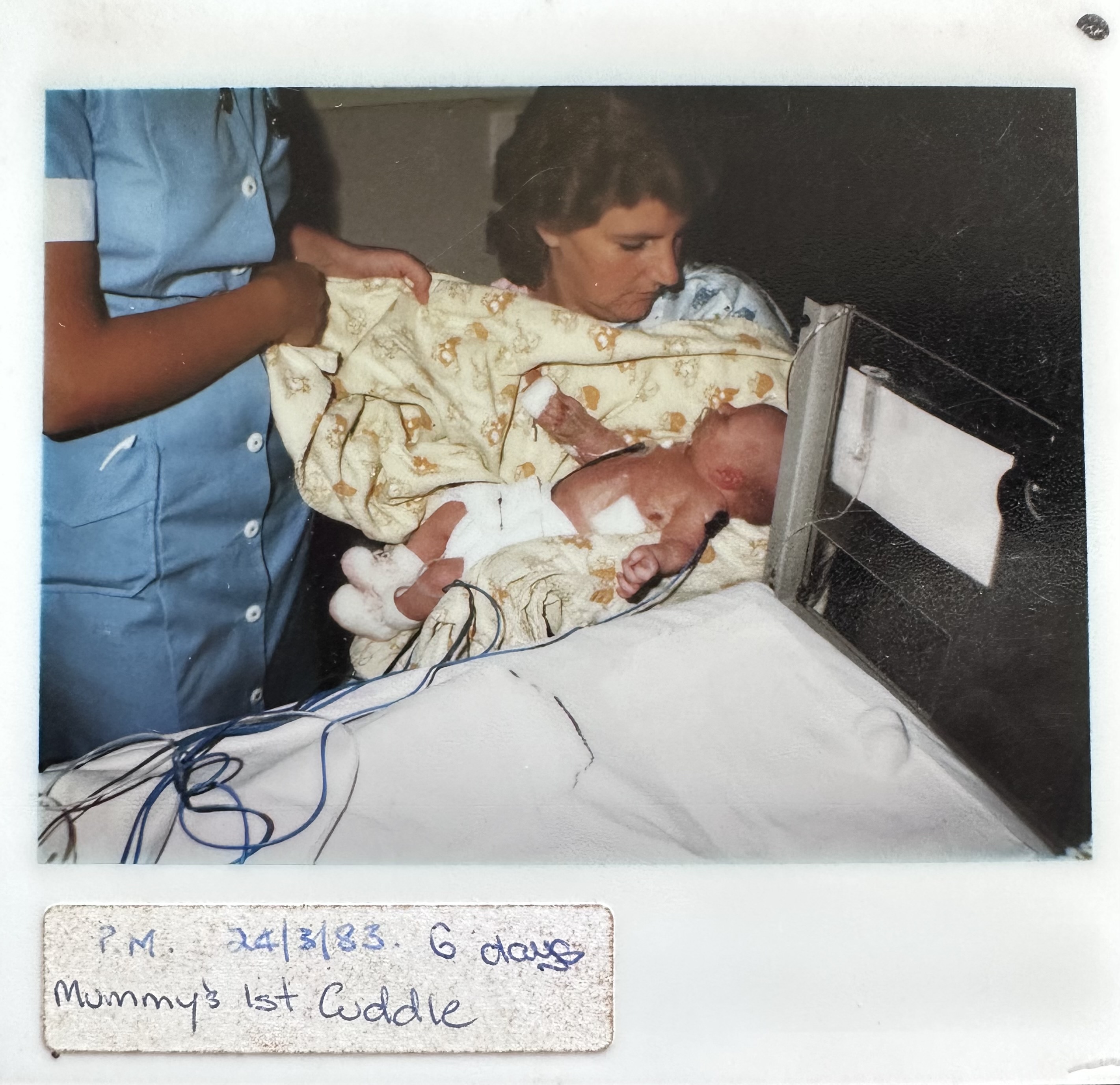
And the first time? Elle was three days old. A tiny newborn, airlifted from Wagga Wagga in
rural New South Wales to Sydney, fighting for her life before she’d even had the chance to live it.
Her parents stood by, helpless, barely able to comprehend what was happening to their child.
That was just the beginning.
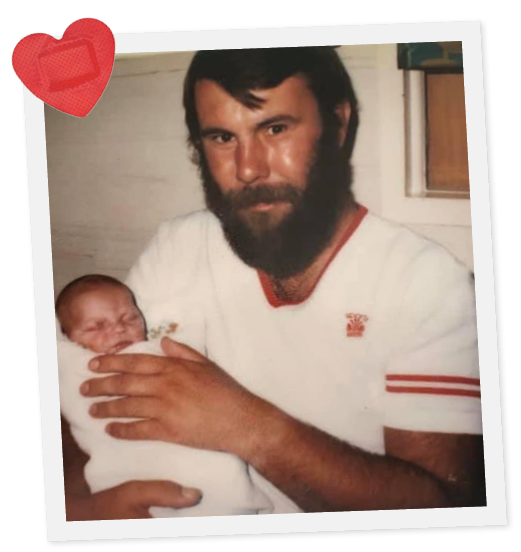
Elle with her father at just 3 days old
Her parents stood by, helpless, barely able to comprehend what was happening to their child. That was just the beginning.
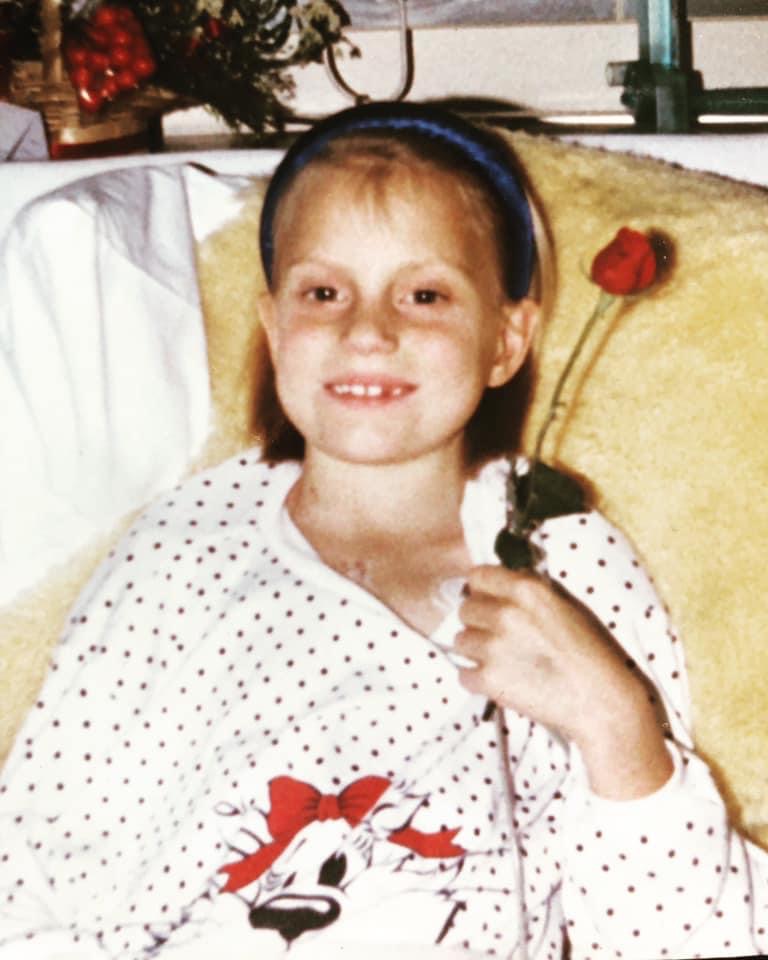
For four decades, Elle’s life has been shaped by her complex congenital heart disease — pulmonary atresia, an intact septum, a leaky mitral valve.
Conditions she was born with. Conditions she has carried every single day since. Conditions that have resulted in multiple surgeries and recoveries, catheters and hospital rooms, and the quiet, exhausting dread of knowing that another operation is never far away.
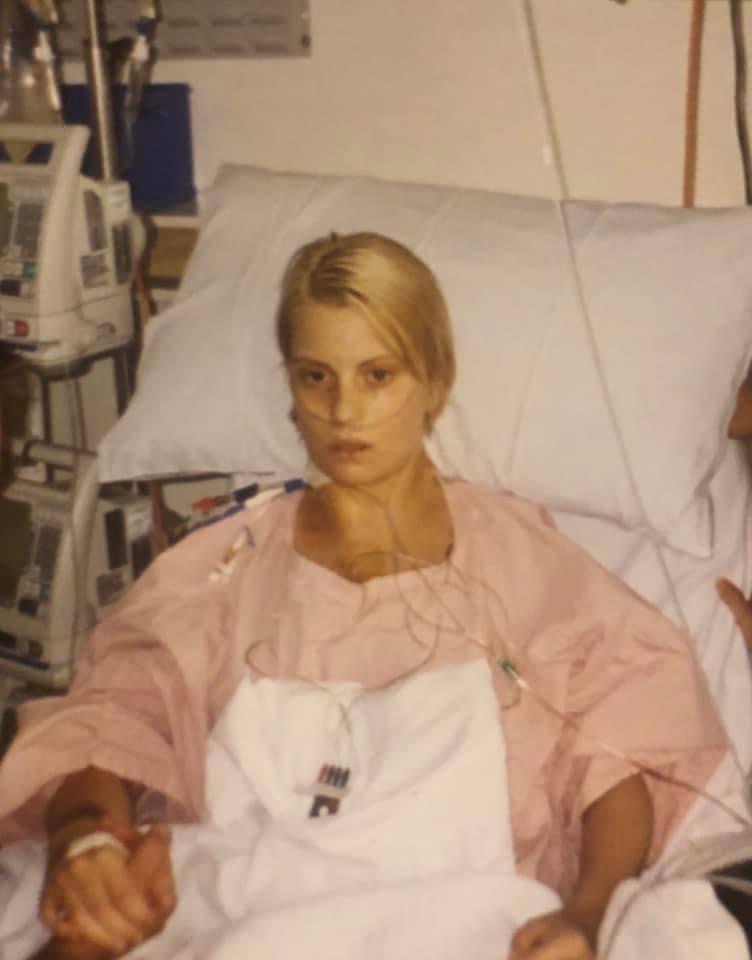
“I remember feeling scared and alone,” she shares. “Every night I woke up with dread under the heavy doona, not sure if I could get myself out of bed.
“Heart disease impacts every aspect of your life — not just physically, but mentally and emotionally. It never leaves you.”
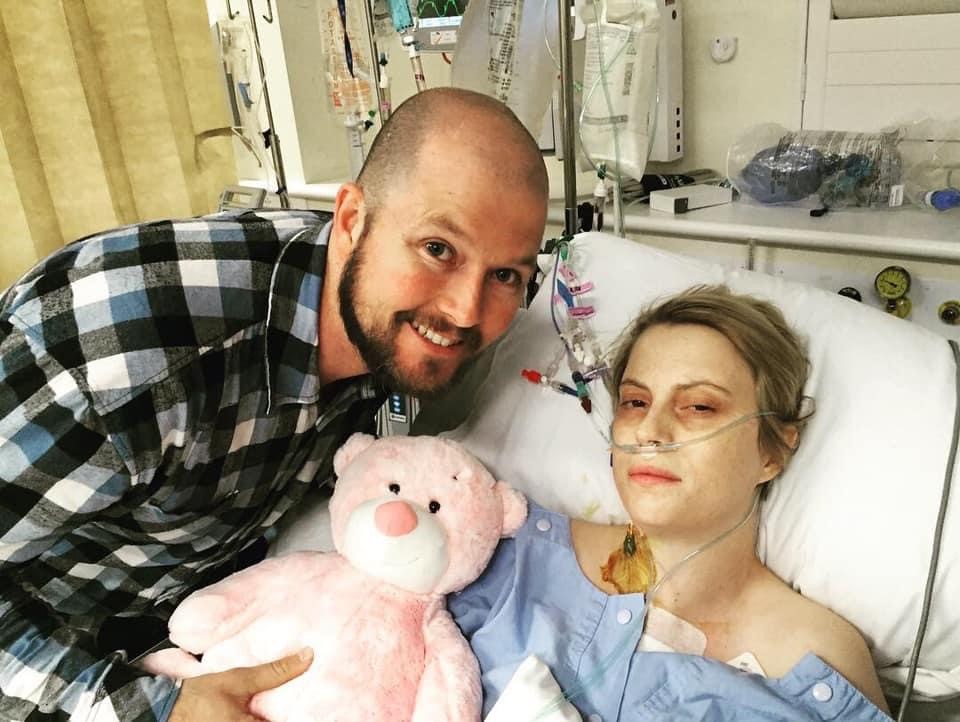
Each surgery means up to six months of recovery for Elle. Bones broken and healed again.
Time away from work, from her husband, from living her life fully.
Elle’s heart is broken – in the most literal sense. And for most of her life, the only way to mend it has involved invasive open-heart surgeries.
Your support is a lifeline for people like Elle.
More than 10,000 Australians develop heart failure every year, but only around 120 hearts are available for transplant.
Thousands are left waiting , running out of time and options.
But now, there is new hope for Elle’s future, a new way to mend her broken heart
He calls them ‘mini-hearts’. They are 3D printed ‘patches’, grown from a patient’s own stem cells, designed to be placed directly over damaged areas of the heart.
In pre-clinical testing, the results have been promising: the patch appears safe, it improves how the heart pumps, and it’s flexible enough to be delivered using keyhole surgery – meaning a fraction of the pain, and a fraction of the recovery time compared with a heart transplant.
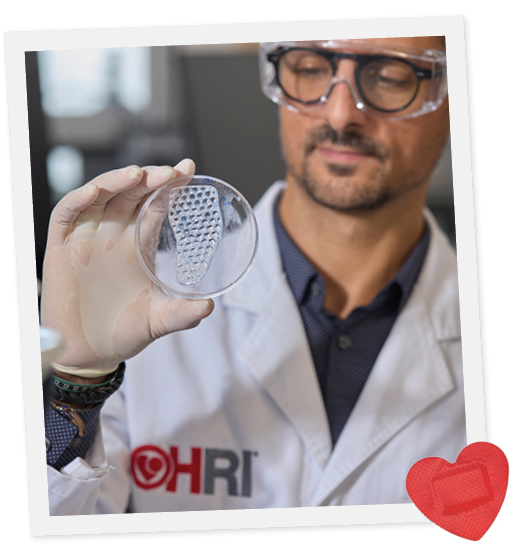
“Cardiovascular disease is one of the leading causes of death for Australians,” shares Associate Professor Gentile. “For those patients with irreversible damage to their heart, the gold standard treatment remains a heart transplant.”
“We hope our research can offer a less invasive long-term alternative to heart transplants for patients like Elle.”
Groundbreaking ‘mini-heart’ research is opening the door to a new future – one where hearts can be repaired without the need for a transplant.
But we’re not there yet.
To bring the ‘mini-hearts’ and other cardiovascular research into clinical trials – and make it a reality for people like Elle – we need your support.
A lab-grown ‘mini-heart’ patch, by contrast, could be ready within three to six months, at an estimated cost of around $100,000. This is considerably less than the $140,000 average cost of a transplant in Australia, and a fraction of what it costs overseas.
This reasearch holds tremendous promise. We are at the cusp of a breakthrough.
What it needs now is the funding to move from the laboratory into clinical trials. And every dollar you give today can help bring that moment closer.